
Your plan for digital marketing in China should not be undertaken without due diligence. China is a massive and often intimidating market, primarily because of its closed digital ecosystem. This distinction means a whole new set of rules and consumer expectations.
In This Article
To navigate what is essentially a “whole new (digital) world,” it’s best to have foreknowledge of what you’ll be getting yourself into. That’s why we’ve put together this guide to help you develop your China digital marketing strategy.
Trust us, you’re gonna need it.
Why China is So…Different
In many of Asia’s smaller territories, the marketing foundations may be familiar to you. It’s typically a mix of Google, Meta, and open web analytics. There’s also usually a clear distinction between content, media and commerce.

In China, this isn’t the case at all. In fact, it’s a different beast entirely. Here’s how:
- Many of the big Western platforms are inaccessible; Most notably, Google and Meta
- Important customer journey milestones like discovery, engagement and conversion take place in their own siloed ecosystems
- Content and commerce are inseparable
- Accessing data is largely restricted
China’s Digital Landscape Overview
Before we delve into specifics regarding platform and campaign planning, we must identify key demographics and web usage behaviors to help you better profile the Chinese population.
78% of China’s 1.4 billion population is digitally active, meaning nearly 1.1 BILLION Chinese citizens are online. With a median age of 40, average daily web usage eclipsing 5 hours and gender demographics split almost exactly 50-50, it’s the perfect market for just about any business endeavor.
But let’s go a little deeper, because that’s where the quirks show.
Mobile-First, App-Centric
China is not only a mobile-first online population, it’s nearly a mobile-only population. Mobile is dominant in other major markets like the US and Europe, but the open web is still crucial. Brand websites and browser-based search journeys are steps you can’t skip.
In China, however, daily digital life takes place within apps rather than browsers. Whereas apps are usually seen as just one of many destinations in the customer journey in the West (and even in Southeast Asia), they are their own standalone environments in China.
This is why in-app digital ad spend in China consistently doubles that of online search ads.
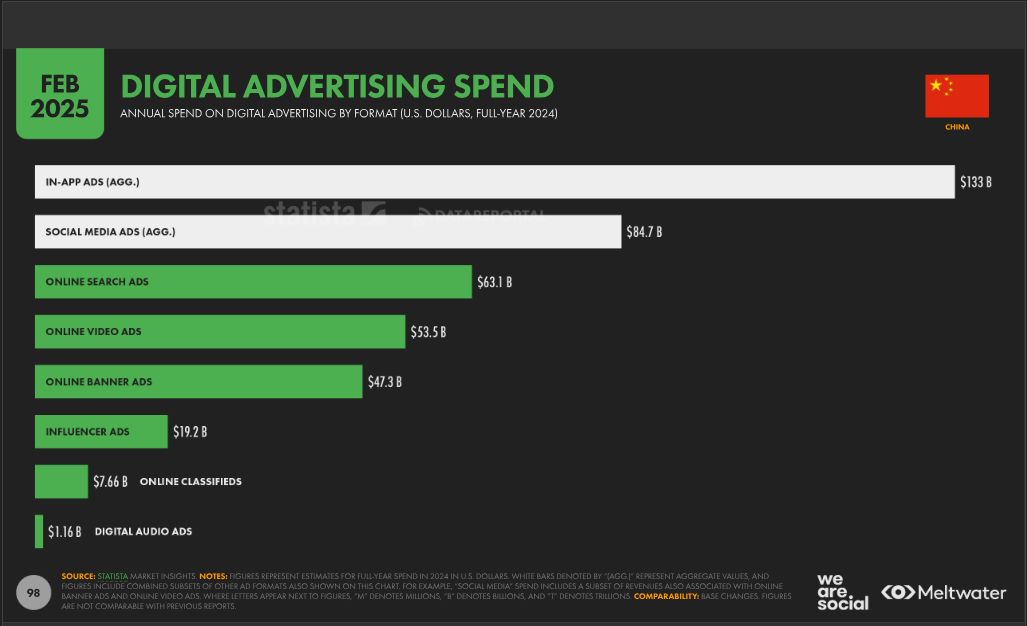
For a successful digital campaign, we highly suggest prioritizing in-platform experiences over the more familiar web-first approach.
Content & eCommerce: Intelligently Integrated
For your past domestic campaigns, you may employ content marketing as an educational touchpoint that pushes the consumer closer to the point of sale. The subsequent conversion then occurs in a separate, dedicated eCommerce platform.
This is where the distinction of China’s digital funnel truly comes into focus—primarily in that the ‘funnel’ as you know it doesn’t actually exist here.
In China, content and eCommerce go hand-in-hand, with eCommerce being tightly integrated in both content and social platforms. As we said, users essentially ‘live’ in the app ecosystem, and prefer not to leave. This demands that content flows into conversion seamlessly without any additional steps. Here are some examples to illustrate:
- Direct purchases in livestreams
- Use of in-app wallets for frictionless checkout
- Post-purchase support while still in the app
As you can see, Chinese web users view eCommerce as a natural extension of the content they consume.
Search Matters…But Differently
Search engines still play an important role in a digital campaign, but it’s a different role. You may be used to search as a discovery channel, but in China, it’s primarily for validation. They’ve already learned about your brand elsewhere, but need to do some light research (e.g., seeking out reviews) to verify your legitimacy.
As long as you have a credible digital footprint across platforms, a user’s ability to cross-reference will improve their likelihood of conversion.
What Drives the Consumer
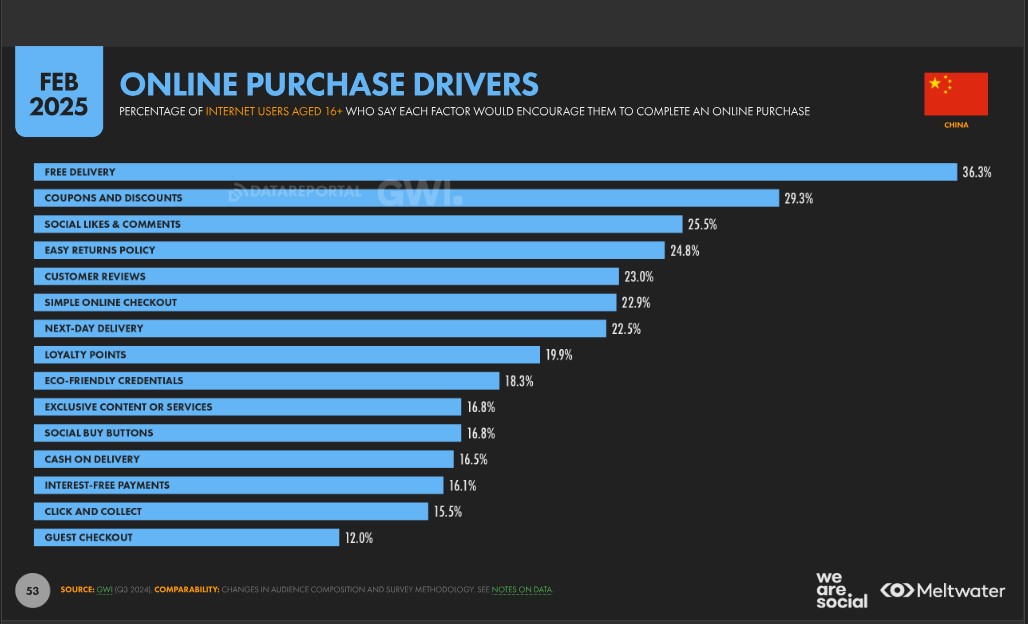
Understanding how Chinese consumers think, and what encourages conversion will help make it easier to achieve. Two words come to mind in describing what nudges a customer to the checkout: empowerment and credibility.
- Deals and Discounts – No one wants to pay full price, which makes the Chinese affinity for coupons quite obvious. Provide offers that make them feel in control of purchasing decisions.
- Social Feedback – Engaging content that receives consistent, positive feedback is a marker that a purchase is a safe bet.
- Return Policies – Customers don’t want to be left in the lurch if they’re unhappy with a purchase, and prefer to know recourse is available if something goes wrong.
- Next-Day Delivery – Fast service is the modern standard, so make sure you’re providing an experience customers expect.
Common, Avoidable China Digital Marketing Mistakes
The first year of digital marketing in China is often a trying one. Many brands who struggle out of the gate chalk it up to weak product offerings or lack of demand. In actuality, the issue is that their early assumptions don’t align with how the Chinese market operates.
These mistakes are the most common, and also the most avoidable.
Replication Without Globalization
Success elsewhere may push you to rush to expand without the proper research and preparation, while replicating your global strategy and expecting traditional funnel logic to bear results.
In China, that simply won’t do. You’ll need to build your plan from the ground up. This is entry into a new, very different market, not expansion. Localization should be top priority, and that requires strategy with an intimate knowledge of the market.
Omnipresence Can Backfire
Brands like to try and be everywhere and once in the first year. By doing this, they tend to spread their budget too thin and struggle to maintain consistency.
For the Chinese digital market, we recommend planting your feet on one or two platforms and, after establishing a strong presence, expand from there.
Lofty Expectations May Not Match Reality
We caution against applying short-term performance benchmarks from other markets, as this can reinforce unrealistic expectations such as immediate ROI from performance media.
New brands often require extended ramp-up periods since platform algorithms typically favor established accounts with a history of engagement. You can expect conversion rates to improve as familiarity with your brand grows, but this will take time.
A Knowledgeable Partner is the Best Guide
We can give you a great outline, and we hope we have. However, given that every brand and marketing plan is unique, one-on-one consultation is the best way to know you specifically should navigate the Chinese market in your digital efforts.
That’s where ICJ comes in. Our native Chinese staff has the first-hand experience and knowledge to help you start your Chinese campaign on the right food while avoiding the unnecessary pitfalls.
